Rotating Indoor Plants for Even Growth
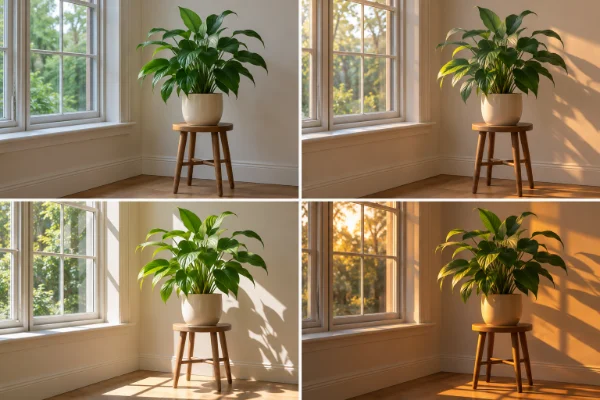
Have you ever noticed your favorite fiddle leaf fig or monstera leaning heavily toward the nearest window, as if trying to escape the room? This dramatic stretch is a natural survival instinct, but it can leave your beautiful houseplants looking lopsided, unstable, and bare on one side. Today, we are going to dive into the simple yet transformative practice of rotating indoor plants. By understanding exactly how and when to turn your pots, you will encourage a sturdy, perfectly balanced silhouette and ensure every single leaf receives the life-giving light it deserves. It is a small adjustment, but it makes a world of difference in your indoor garden.
What You Need Before We Start
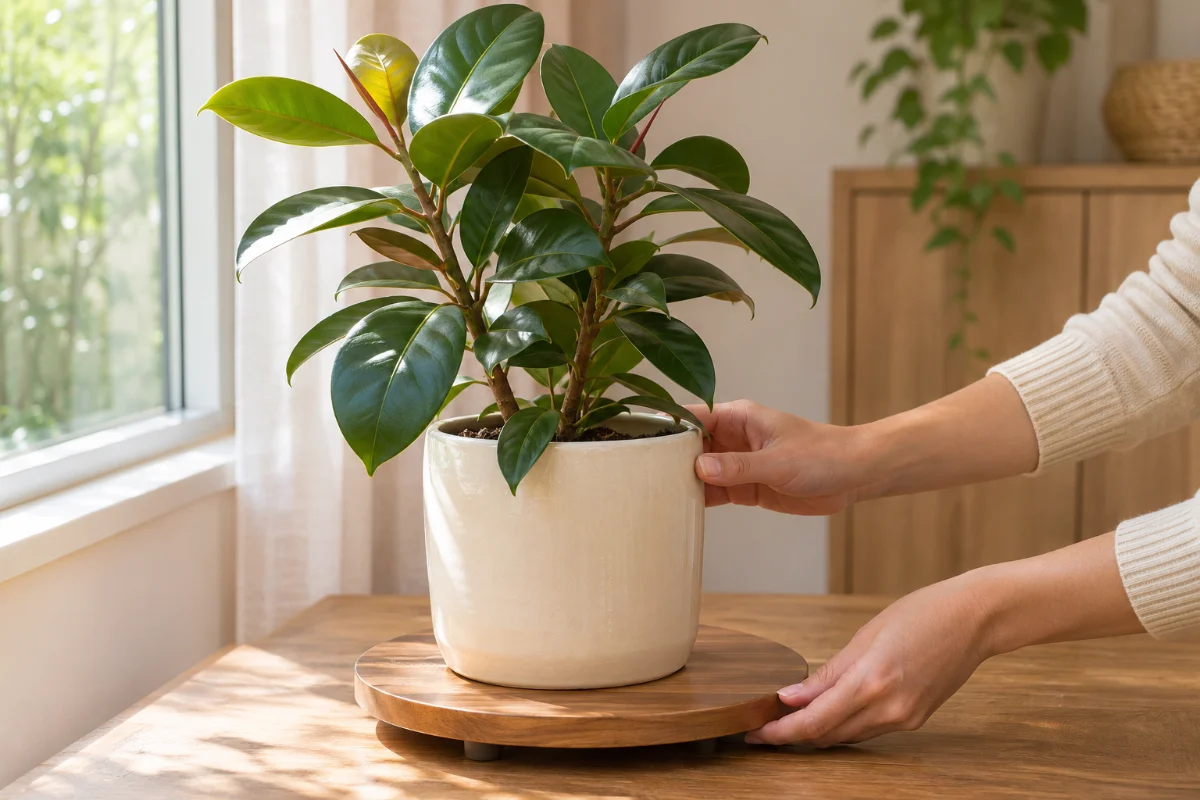
Before we start spinning your living room into a dizzying array, you only need a few simple tools and concepts. First, you need your own observation skills and a basic calendar (whether digital on your phone or paper on the fridge) to keep track of your schedule. If you have very heavy floor plants, I highly recommend investing in a rolling plant caddy or placing felt furniture pads under your heavy ceramic pots to protect your floors from scratches.
We also need to define a quick botanical term: phototropism. This is the plant's natural hormonal response that makes its cells elongate on the shaded side, forcing the stem to bend toward a light source. Our goal today is to manage this instinct gracefully, distributing that cellular growth evenly around the entire stem.
Mastering the Rotation: A Step-by-Step Guide
Rotating your plants might sound as easy as spinning a wheel, but doing it correctly prevents stress and leaf damage. Here is how to execute the perfect rotation routine:
- Assess the lean: Stand back and look at your plant's silhouette. Identify which side is currently facing the light and which side is facing the interior of the room. You will likely notice the interior-facing leaves are smaller or pointing backward.
- Apply the quarter-turn rule: This is the golden rule of rotating indoor plants. Never flip a plant 180 degrees all at once. Instead, gently turn the pot 90 degrees (a quarter turn) in one consistent direction—for example, always clockwise.
- Set a consistent schedule: Tie your rotation to another existing habit. The easiest method is to give your plants a quarter-turn every single time you water them. This builds the habit naturally without requiring a separate reminder.
- Clean and inspect: As you turn the plant, you will suddenly see the "back" side that is usually hidden against a wall. Take this opportunity to wipe away dust with a damp cloth and check for any sneaky pests like spider mites that love to hide in the shadows.
An Alternative Approach: The Light Diffuser
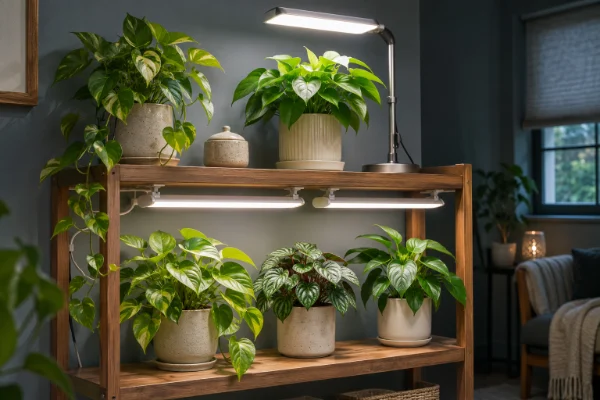
What if you have a massive indoor tree in a heavy concrete planter that is physically impossible to rotate? The alternative to rotating the plant is manipulating the light itself. You can place a sleek, full-spectrum LED grow light on the darker side of the room, aiming it at the back of the plant. This creates a multi-directional light environment, reducing the plant's need to lean toward the single window. It is a fantastic, hands-off way to achieve balanced growth.
How to Know if Your Routine is Working
You will know your rotation schedule is successful when you see a shift in the plant's posture. Over the course of a few weeks or months, depending on how fast the plant grows, that dramatic lean will straighten out. The main stem will become thicker and sturdier because it is supporting weight evenly in all directions. Additionally, you will notice new foliage unfurling on all sides of the plant, rather than just clustering at the front.
Common Mistakes and Obstacles
The most common and damaging mistake I see is the 180-degree flip. When you take the dark, shade-adapted back of a plant and suddenly expose it to the harsh, direct rays of a window, those delicate leaves will almost certainly suffer from severe sunburn. Meanwhile, the sun-adapted leaves are plunged into darkness, causing them to yellow and drop off. Always stick to the gradual 90-degree turn! Another obstacle is over-rotating. Turning a plant every single day forces it to constantly expend energy reorienting its leaves to the sun, which exhausts the plant and stunts its growth.
Additional Adjustments and Scenarios
Keep in mind that different seasons require different approaches. In the peak of summer, when the sun is intense and plants are in their active growing phase, you might need to rotate them every week. In the dead of winter, when growth slows down or stops entirely, you can scale back to rotating them only once a month. Furthermore, climbing plants on a trellis or moss pole should be rotated with extreme caution; you want to ensure the aerial roots remain facing the pole so they can continue to climb securely.
Sometimes I have been asked this:
- How often should I rotate my indoor plants? As a general rule, every one to two weeks during the active growing season (spring and summer) is perfect. Adjust this to match your watering schedule for ease.
- Can rotating shock a sensitive plant? Yes. Plants like the Ficus benjamina (Weeping Fig) despise being moved and may drop leaves if rotated too frequently. For highly sensitive plants, turn them much slower, perhaps only an inch every week.
- Do all plants need to be rotated? Almost all do, but if a plant receives perfectly even, direct light from overhead (like under a skylight or a suspended grow light), rotation is completely unnecessary.
- What if my plant is currently blooming? If your plant has delicate flowers, such as an orchid, avoid rotating it while the buds are forming and opening. Changing the light angle can cause the buds to blast (drop off) prematurely. Wait until the bloom cycle finishes.
- Should I rotate a plant that is recovering from root rot? No. A sick plant needs stability to heal. Keep it in a warm, gently lit spot and avoid making any changes to its environment, including rotation, until you see firm new growth.
Final Thoughts
Cultivating a balanced, thriving indoor garden is a deeply rewarding practice that connects us to the subtle rhythms of nature. By taking a few seconds to practice rotating indoor plants, you are actively participating in their well-being, helping them build strength and beauty from every angle. So, take a stroll through your home today, observe the leans, and give your green companions a gentle spin. Happy growing!