Houseplant Fertilizer Labels Explained
Have you ever stood in the gardening aisle, staring at a wall of colorful bottles, feeling completely overwhelmed by the tiny numbers and scientific jargon? You are definitely not alone. Figuring out how to feed our indoor gardens can feel like trying to read a foreign language. But today, we are going to decode those houseplant fertilizer labels together. I will show you exactly what those mystery numbers mean and how to choose the perfect meal for your leafy companions. By the end of this guide, you will be able to feed your plants with total confidence, encouraging vibrant growth without the fear of accidental chemical burns.
What You Need Before We Start
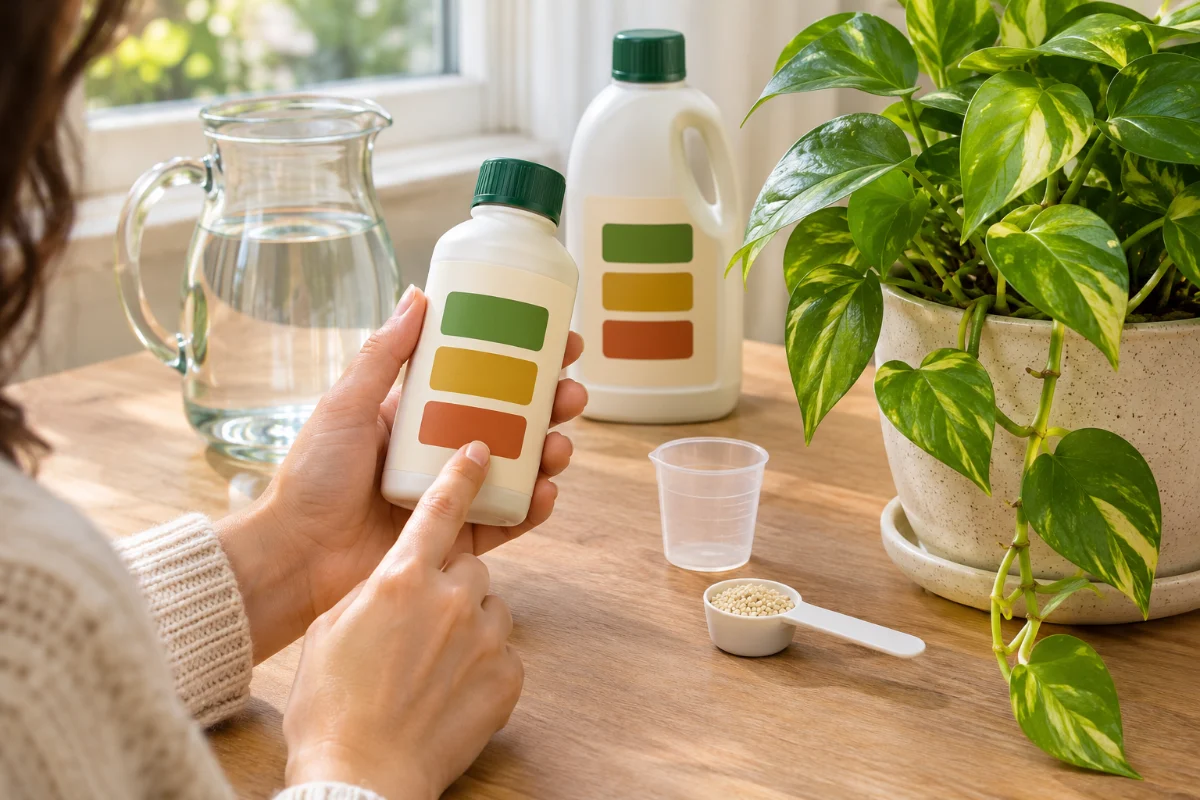
Before you start mixing anything, you need to gather your supplies. Grab the bottle of fertilizer you currently have (or are thinking of buying), a dedicated measuring spoon (never use the ones you eat with!), and a watering can. It is also crucial to ensure your plant is actually ready to be fed. We only fertilize actively growing plants in the spring and summer. Never fertilize a plant that is completely dry, dormant, or severely stressed, as this will only damage its fragile root system.
Decoding the Label: A Step-by-Step Guide
The most important part of any fertilizer label is the N-P-K ratio. These are the three prominent numbers proudly displayed on the front of the bottle (like 10-10-10 or 3-1-2). Here is exactly how to read them:
- Understand Nitrogen (N) - The Foliage Builder: The first number stands for Nitrogen. This is the nutrient responsible for rich, green, leafy growth. If you are growing foliage plants like monsteras, pothos, or ferns, you want a fertilizer where this first number is equal to or higher than the others.
- Understand Phosphorus (P) - The Root and Bloom Booster: The second number is Phosphorus. This element stimulates strong root development and is essential for producing flowers and fruits. If you are trying to coax your African violet or peace lily into blooming, look for a higher middle number.
- Understand Potassium (K) - The Health Protector: The third number is Potassium. Think of this as your plant's immune system booster. It helps with overall cellular function, water regulation, and disease resistance, keeping the whole plant sturdy and resilient.
- Read the Dilution Instructions: Turn the bottle around and find the mixing ratio. This will usually say something like "Mix 1 teaspoon per gallon of water." This step is critical. Never guess or eyeball the measurements.
An Alternative Approach: Organic Top Dressing
If measuring liquid chemicals and decoding NPK ratios feels too stressful, there is a wonderfully simple alternative: organic top dressing. Instead of synthetic liquids, you can use natural worm castings or rich compost. Simply sprinkle a handful over the topsoil of your potted plants every few months. Every time you water, it creates a gentle, slow-release compost tea that naturally feeds the roots without any risk of chemical burn.
How to Know if Your Feeding Routine is Working
You will know you have mastered your houseplant fertilizer labels when your plants respond with vigorous, healthy growth. Within a few weeks of starting a proper feeding routine, you should notice leaves looking darker, glossier, and firmer. The most obvious sign of success is a sudden flush of new stems and perfectly formed leaves that are slightly larger than the previous ones.
Common Mistakes and Obstacles
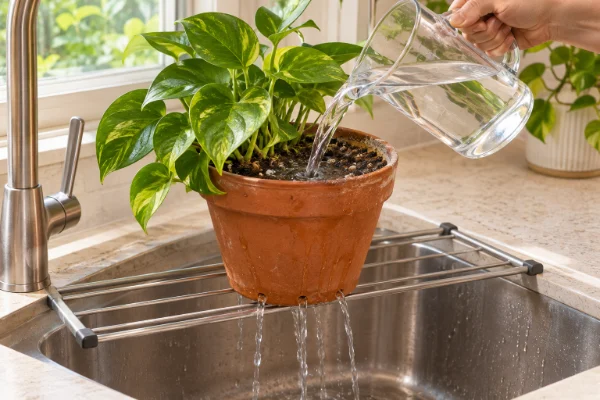
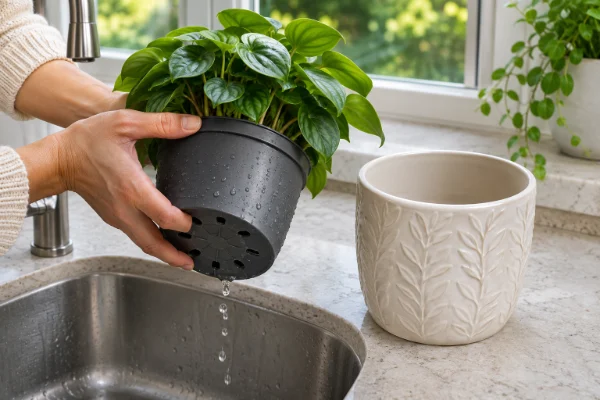
The biggest mistake in houseplant nutrition is the "more is better" mindset. If a plant looks a bit sad, our maternal instinct is to feed it. But over-fertilizing causes a buildup of mineral salts in the soil, which literally draws moisture out of the roots. This results in "fertilizer burn," showing up as crispy brown tips on the leaves and a crusty white buildup on the soil surface. If you see this, stop fertilizing immediately and flush the pot with plain water for several minutes to wash away the excess salts.
Additional Adjustments and Scenarios
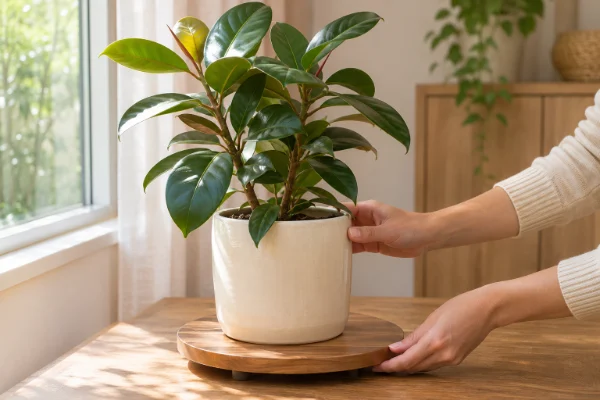
Always adjust your fertilizer strength based on the type of plant. Heavy feeders, like large tropical ficus trees or fast-growing vines, will happily consume a standard dose. However, delicate plants like calatheas, ferns, and especially orchids, require a very light touch. For these sensitive beauties, always cut the recommended dose in half. Succulents and cacti need even less—often just one highly diluted feeding at the very beginning of their growing season.
Sometimes I have been asked this:
- Do I need a special fertilizer for every different plant? Not at all! A balanced, all-purpose liquid fertilizer (like a 10-10-10 or 20-20-20 diluted down) will keep 90% of typical houseplants incredibly happy.
- What are the "micronutrients" listed on the back? These are elements like iron, calcium, magnesium, and zinc. While NPK are the main course, micronutrients act like essential vitamins for your plant, preventing specific issues like yellowing between leaf veins.
- Can fertilizer fix my dying plant? No. Fertilizer is food for healthy, growing plants, not medicine for sick ones. If your plant is dying from root rot or lack of light, fertilizer will only accelerate its decline.
- Is liquid fertilizer better than granular spikes? In my experience, yes. Liquid fertilizer distributes evenly throughout the entire root zone immediately. Fertilizer spikes concentrate all the chemicals in one tiny spot, which can burn the roots touching it while leaving the rest of the plant starving.
- Does liquid fertilizer go bad? Synthetic liquid fertilizers generally last for years if kept in a cool, dark cabinet. However, organic liquid fertilizers (like fish emulsion) can degrade and smell horrific if stored improperly, so use those up within a season or two.
Final Thoughts
Learning to read the label on your plant food is one of the most empowering steps you can take as a plant parent. You are no longer guessing; you are providing exactly what your green companions need to flourish. So grab that bottle, check your NPK numbers, and treat your plants to a well-deserved, perfectly mixed meal!