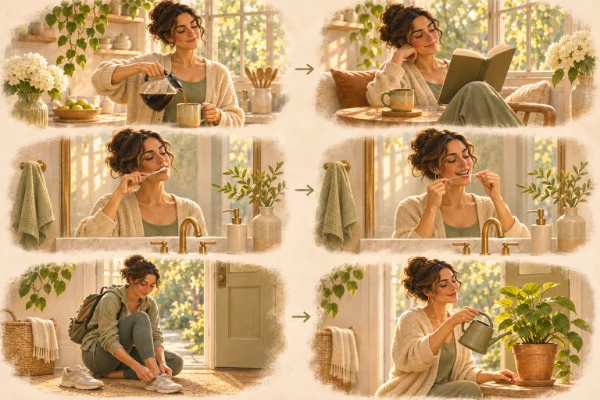
Environment Design for Better Habits
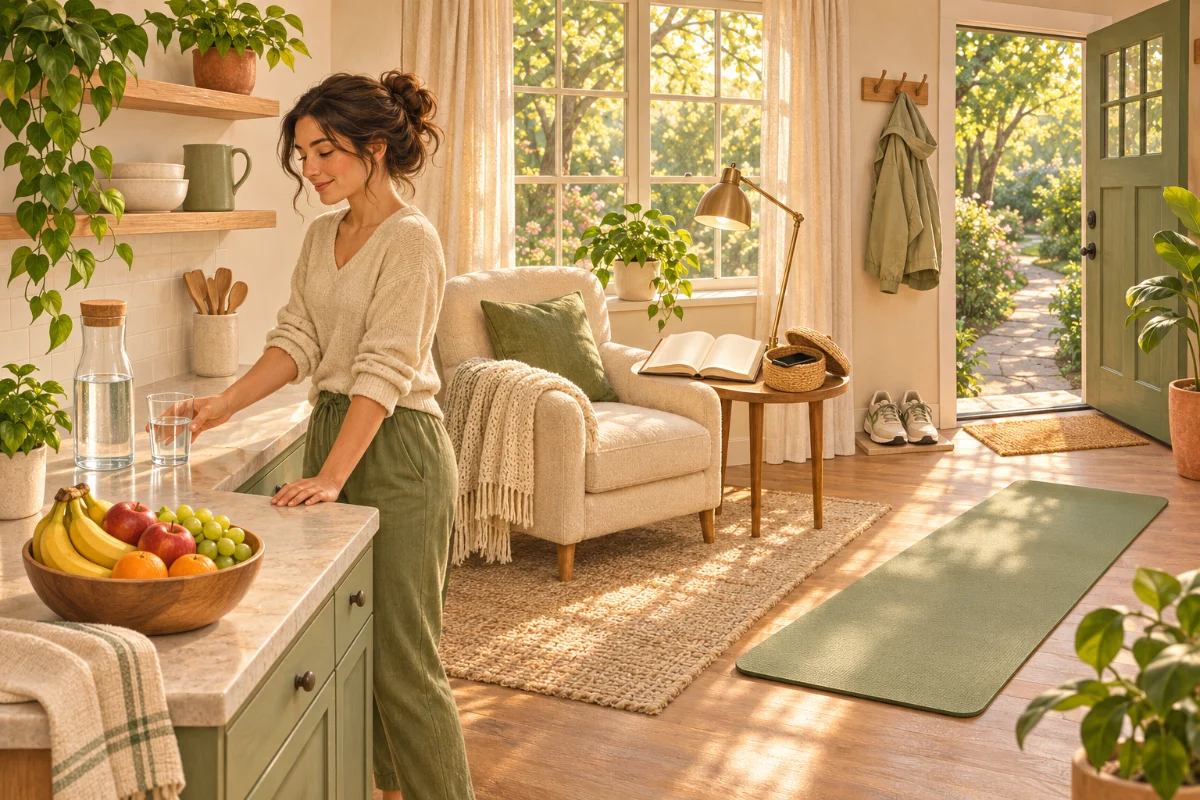
Have you ever noticed that you naturally drink more water when a filled glass is sitting right next to your keyboard? That simple realization is the core of environment design. We often blame ourselves for lacking the willpower to stick to our goals, when the real culprit is a physical space that works against us. In this guide, you will learn how to arrange your home and workspace to make good habits more convenient and automatic. By intentionally shaping your surroundings, you will discover how to save your mental energy and let your environment do the heavy lifting for your daily routines.
What You Need Before Starting
You do not need to buy expensive organizational bins or hire an interior designer to begin. All you need is a weekend morning and a willingness to look critically at your own living space. Start by picking just one habit you want to build and one habit you want to break. Give yourself permission to move furniture around, relocate items you use daily, and experiment. True environment design is about function over aesthetics.
A Step-by-Step Guide to Environment Design
Making good habits more convenient is all about managing "friction." Friction is the number of steps or the amount of effort required to do something. Here is how you can manipulate friction to your advantage.
- Audit your current space: Walk through your home and identify where your habits currently happen. If you want to read more, where do your books currently live? Are they hidden on a high shelf?
- Reduce friction for the good habit: Make the right choice the easiest choice. If you want to take vitamins every morning, place the bottle directly on top of your coffee maker. Make it so visible and accessible that you cannot ignore it.
- Increase friction for bad habits: Add physical steps to the behaviors you want to avoid. If you want to stop watching television right after work, unplug the TV and put the remote in a drawer in another room.
- Use visual cues: Humans are highly visual creatures. Leave your running shoes by the front door, or place a bowl of fresh apples in the center of the kitchen counter. Let the physical objects serve as your reminders.
- Evaluate and adjust: After one week, observe what happened. Did you eat the apples? If not, maybe they need to be on your desk instead. Adjust the environment until the habit flows naturally.
An Alternative Approach: Digital Environment Design
Our physical spaces are not the only environments we inhabit; our digital spaces are equally important. If your goal is to reduce screen time or focus better at work, you must design your digital environment. Move distracting apps off your phone's home screen and into a hidden folder. Turn off all non-essential notifications. Change your phone screen to black-and-white mode to make it less visually appealing. By making your digital world less convenient for mindless scrolling, you automatically create more time for your good habits.
My personal tip: I used to struggle to do my morning yoga because unrolling the mat felt like too much work when I was half-awake. My solution was radical but simple: I started leaving the yoga mat completely unrolled on my bedroom floor right next to my bed. The moment my feet hit the floor in the morning, I was already standing on the mat. The environment made the habit inevitable.
How to Know if Your Design is Working
You will know your environment design is successful when you perform your desired habit without experiencing an internal debate. You will not have to negotiate with yourself or try to summon motivation; you will simply grab the book because it is right next to your favorite chair. Another clear observable sign is a feeling of ease. When your environment supports you, life feels a little less exhausting and a lot more fluid.
Common Mistakes and How to Overcome Them
It is easy to get carried away when reorganizing your life. Here are the most frequent pitfalls and how to fix them:
- Prioritizing aesthetics over function: Storing your healthy snacks in beautiful, opaque containers makes your pantry look great, but it hides the food you want to eat. Solution: Use clear containers for healthy items and opaque containers for treats.
- Changing everything at once: Trying to redesign your kitchen, bedroom, and office in one day will leave you overwhelmed. Solution: Focus on optimizing just one small zone—like your nightstand or your work desk—per week.
- Ignoring the path of least resistance: If you place your journal on a beautiful shelf across the room, but you always sit on the sofa, you will never write. Solution: Always place the tools for your good habits exactly where you naturally spend your time.
Adjustments for Shared Spaces
If you live with a partner, family members, or roommates, you cannot always overhaul the entire living room to suit your habits. In shared spaces, focus on micro-environments. You can design your specific side of the bed, your designated shelf in the refrigerator, or your personal work bag. Communicate your goals to the people you live with, asking them not to move the specific visual cues you have set up for yourself.
Sometimes I have been asked this:
1. Does environment design really beat willpower?
Absolutely. Willpower is like a battery that drains throughout the day as you make decisions. Environment design eliminates the need to make a decision in the first place, allowing you to bypass willpower entirely.
2. How can I use this for my eating habits?
The saying "out of sight, out of mind" is scientifically proven. If you want to eat healthier, simply do not keep junk food in your house. If it is not there, you cannot eat it. Keep healthy options at eye level in the fridge.
3. What if my workspace is also my bedroom?
When spaces serve dual purposes, you must use contextual cues. When it is time to work, set up your laptop and perhaps light a specific candle. When the workday is over, physically close the laptop and put it away in a drawer to signal to your brain that the room is now a place for rest.
4. How often should I rearrange my space?
Whenever you notice a good habit slipping or a bad habit creeping back in, it is time for an audit. Our lives change, and our environments need to adapt to support our current goals.
5. Is this related to minimalism?
They share similarities, but they are not the same. Minimalism is about having less; environment design is about placing what you have strategically. You can own many things, as long as they are arranged to support the person you want to become.
Wrapping Up
Applying environment design to your life is a profound act of self-care. Instead of constantly fighting against your surroundings, you are setting yourself up for automatic success. Remember that making good habits more convenient is not about being lazy; it is about being incredibly smart with your energy. Take a look around your room right now, find one small physical item you can move to support your goals, and make the change today.