How to Bottom Water Houseplants Safely
If you have ever tried bottom watering, you know it is a fantastic way to hydrate your indoor garden. But a common fear holds many of us back: what if the soil absorbs too much and leaves the roots drowning in a muddy mess? Today, we are going to master bottom watering houseplants without leaving their roots soaked. You will learn how to give your plants a deep, satisfying drink while protecting them from the dangers of root rot. This method encourages strong, downward root growth and is a game-changer for your plant care routine.
What You Need Before We Start
To get started, you will need a few basic items. First, ensure your plant's pot has at least one functioning drainage hole—this technique is impossible without it! You will also need a basin, a sink, or a deep tray large enough to hold your pots, and room-temperature water. Finally, have a timer handy (your phone works perfectly) to prevent accidental over-soaking.
The Safe Bottom Watering Method: A Step-by-Step Guide
Let's walk through the exact process to ensure your plants get just enough water without becoming waterlogged:
- Verify the thirst: Before doing anything, check that your plant actually needs water by pushing your finger two inches into the soil. It should feel dry.
- Prepare the bath: Fill your basin or sink with about one to two inches of room-temperature water.
- Set the timer: Place your potted plant into the water and immediately set a timer for 15 to 20 minutes. This is the golden window for most medium-sized pots.
- Check the topsoil: After the timer goes off, touch the top of the soil. If it feels slightly moist, the plant has wicked up enough water. If it is still bone dry, give it 10 more minutes.
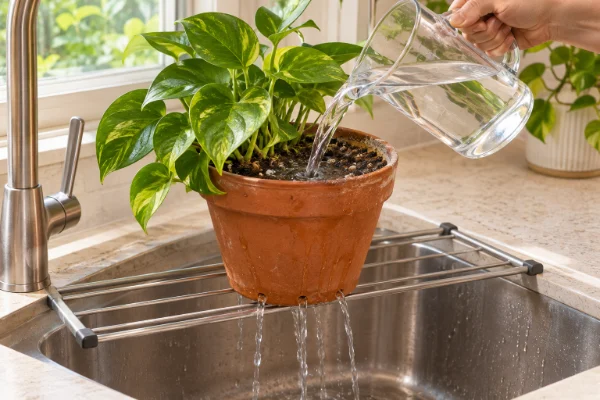
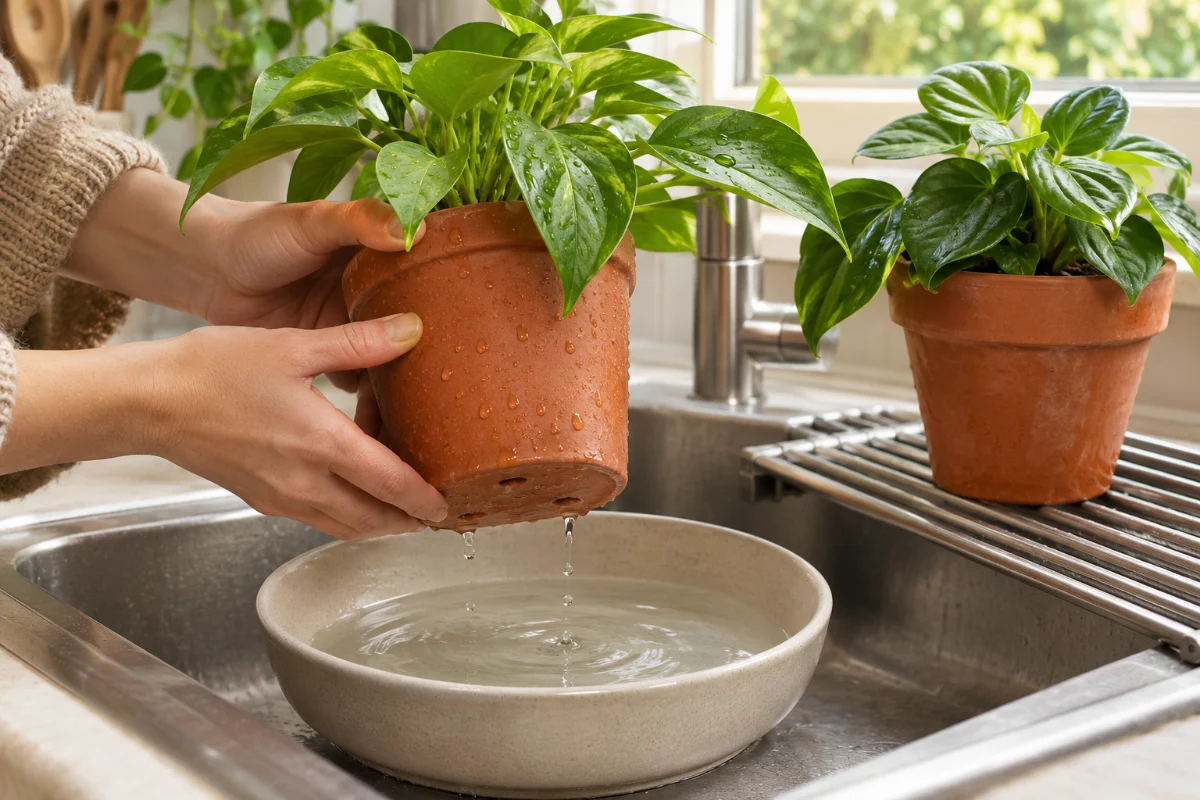
- Drain completely: This is the most crucial step. Remove the pot from the water and let it sit on a draining rack or an empty sink for at least 15 minutes. Never put a dripping pot back into its decorative outer cachepot.
An Alternative Approach: The Self-Watering Wicking Pot
If you don't have the time to actively monitor a water bath, consider repotting into a self-watering planter that uses a cotton wick. You fill a reservoir at the bottom, and the wick draws up exactly the right amount of moisture over several days. It automates bottom watering while keeping the main root ball safely above the water line.
How to Know if Your Method is Working
You will know you have nailed this technique when the pot feels noticeably heavier after the bath, but water does not pool on the surface of the soil. Within a few hours, a slightly wilted plant should look perky and firm. Over the next week, the soil should gradually dry out again, signaling a healthy wet-to-dry cycle without any signs of yellowing or mushiness.
Common Mistakes and Obstacles
The most dangerous mistake is skipping the drainage phase. If you put a freshly bottom-watered plant straight onto a saucer, excess water will pool at the base, effectively soaking the roots for days. Always let gravity do its job on a rack first. Another obstacle is treating large and small pots identically; tiny two-inch pots might only need five minutes, while large floor plants might need forty-five minutes to absorb adequate moisture.
Additional Adjustments and Scenarios
If you are using terracotta pots, remember that the clay itself will absorb some of the water. You might need to leave them in the basin a few minutes longer than plastic pots. Conversely, if your potting mix is very dense and heavy in peat moss, it will act like a sponge and saturate very quickly, so reduce the soaking time to prevent a soggy root environment.
Sometimes I have been asked this:
- Can I bottom water every type of houseplant? Most plants love it, but avoid it for plants that have no drainage holes or those newly repotted in very loose, chunky aroid mixes that don't wick well.
- Do I ever need to water from the top again? Yes! About once a month, water thoroughly from the top to flush out any accumulated mineral salts from fertilizers or tap water.
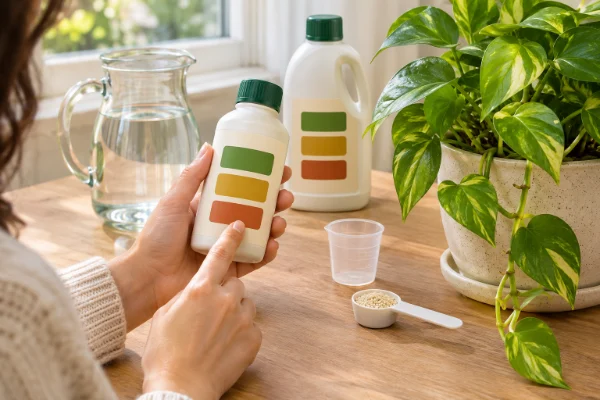
- Should I mix liquid fertilizer into the bottom watering basin? You absolutely can. Just dilute it to half-strength to avoid burning the roots as they wick the water up.
- How high should the water be in the basin? One to two inches is plenty for most pots. The capillary action of the soil will pull the moisture up to the top, even if the water level is low.
- What if the topsoil never gets wet, even after an hour? If the pot is heavy but the top is dry, that is perfectly fine. The roots are lower down and have gotten what they need. Don't leave it soaking just to wet the top half-inch.
Final Thoughts
Mastering bottom watering takes a little practice, but it is one of the most effective ways to build a robust, deep root system. By setting a timer and prioritizing proper drainage, you completely remove the risk of drowning your plants. Grab a bowl and give it a try today—your houseplants will thank you!