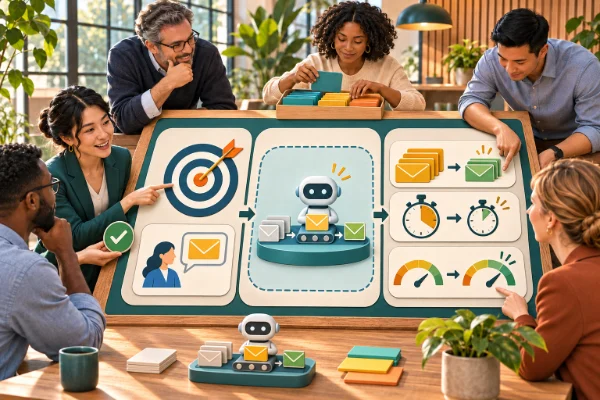
Human-in-the-Loop Workflows for Critical AI Decisions
A few months into my AI journey, I made a classic rookie mistake. I set up an automated workflow to reply to customer support tickets using artificial intelligence, turned it on, and walked away. Two days later, I logged in to find that the AI had confidently approved three refund requests that violated our policy and sent a highly robotic, unsympathetic response to a client who was genuinely struggling. My heart sank. I had traded my brand's reputation for a few hours of saved time. That painful weekend taught me the most crucial lesson of modern business technology: you cannot abdicate your leadership to a machine. This is where mastering human-in-the-loop workflows becomes the ultimate game-changer for female founders who want to scale without losing their soul.
As we integrate more technology into our daily operations, the goal isn't to replace ourselves. The goal is to elevate ourselves from the tedious heavy lifting so we can focus on the final, critical decisions. Let us dive deeply into what these workflows look like, why they protect your business, and how you can implement them immediately.
The Core Philosophy of Human-in-the-Loop
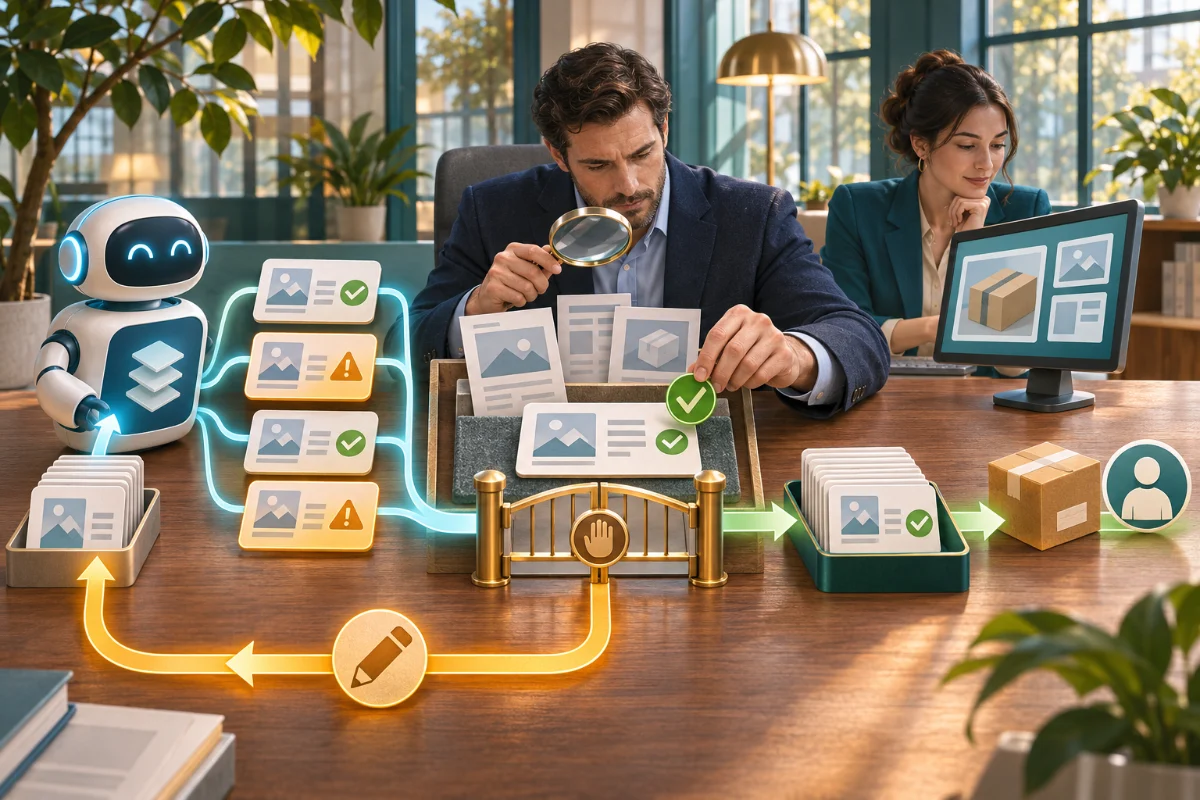
At its most basic level, a human-in-the-loop (HITL) workflow is a system where artificial intelligence and human intelligence collaborate seamlessly. The AI acts as the tireless intern—processing data, generating initial drafts, categorizing information, and flagging anomalies. The human acts as the executive editor—reviewing the AI's work, providing contextual judgment, adding emotional nuance, and making the final approval.
Think of it like autopilot on a commercial airplane. The autopilot can fly the plane smoothly for hours, keeping it at the right altitude and speed. But you absolutely want a trained pilot in the cockpit to handle the takeoff, the landing, and any unexpected turbulence. In your business, you are the pilot. You use AI to maintain your cruising altitude, but you must keep your hands near the controls for the decisions that truly matter.
Why Critical Decisions Require a Human Touch
Artificial intelligence is brilliant at pattern recognition, but it is fundamentally devoid of emotional intelligence, ethics, and lived experience. When dealing with critical business decisions, these human traits are non-negotiable. If you are evaluating a potential hire, negotiating a complex partnership, or handling a delicate customer service escalation, an AI cannot read the subtle emotional cues or understand the cultural context.
Furthermore, AI models suffer from "hallucinations"—they can fabricate information and present it as absolute truth. If you rely on an automated system to pull financial data for a major investment decision without a human verifying the numbers, you are putting your entire livelihood at risk. A human-in-the-loop workflow acts as a mandatory quality control checkpoint, ensuring that every piece of data and every piece of outbound communication aligns with your strict standards and core values.
Mapping Your High-Risk vs Low-Risk Tasks
To build an effective workflow, you first need to audit your tasks and categorize them by risk level. Not everything requires your immediate oversight. If an AI is automatically categorizing your incoming email newsletters into a "Read Later" folder, that is a low-risk task. If it miscategorizes one, the consequences are minimal. You can let that run fully automated.
However, anything that directly impacts your revenue, your brand reputation, or your legal compliance is a high-risk task. Drafting proposals, sending invoices, responding to negative reviews, or creating public-facing content all fall into this category. These are the specific areas where you must intentionally design a human-in-the-loop workflow. The AI can absolutely do the initial prep work—like drafting the proposal based on your notes—but the system must pause and wait for your manual "approve and send" command.
Designing Your First HITL System
Building your first collaborative workflow is easier than you might think. Let us design a simple system for content creation. Instead of asking an AI to write and publish a blog post automatically, you break the process into stages.
First, you provide the AI with a detailed prompt, including your target audience, your brand voice, and your specific insights. The AI generates the first draft. This is the "loop." You step in, read the draft, and immediately notice that while the structure is great, the tone is a bit too formal. You edit the introduction, inject a personal anecdote, and soften the conclusion. Once you are satisfied, you manually publish the piece. You have just saved three hours of staring at a blank page, but the final product still sounds exactly like you. Over time, you can even feed your edited versions back into the AI, teaching it your preferences so its future drafts become even better.
Empowering Your Team Through Collaboration
If you have a team, introducing these workflows can drastically shift their productivity and job satisfaction. Often, employees fear that AI will replace them. By explicitly designing and training them on human-in-the-loop systems, you reinforce that their judgment is irreplaceable. You are upgrading them from content generators to strategic editors.
Technology should empower your vision, not dilute it. By intentionally keeping a human in the loop for decisions that need review, you harness the immense speed and analytical power of artificial intelligence while fiercely protecting the empathy, quality, and unique perspective that make your business irreplaceable. Step confidently into this collaborative future, knowing that your ultimate power lies in your judgment.